
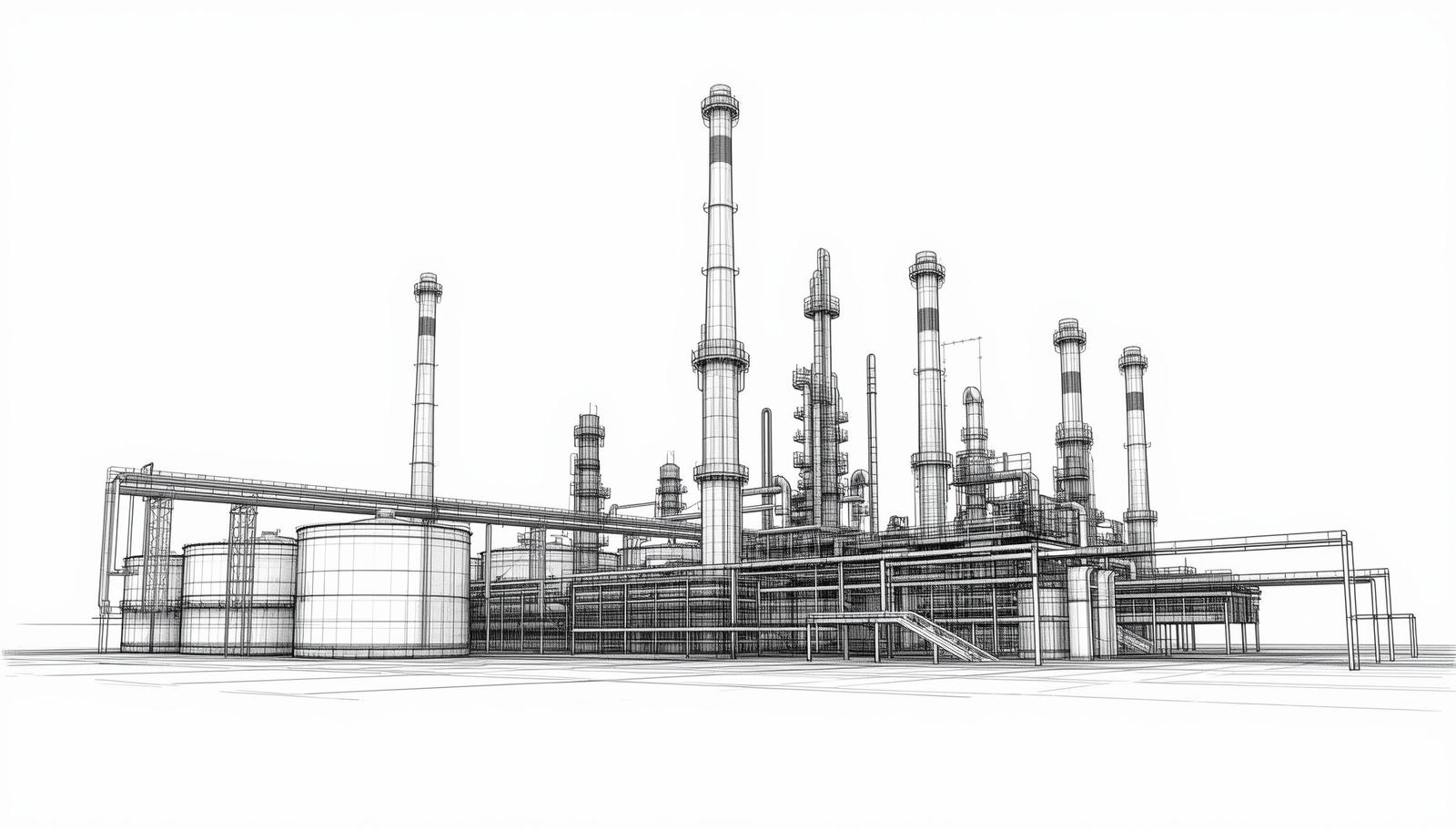
Four layers — from the fence to the restricted area.
Every Baltic CCTV product plays a specific role in protecting high-risk sites, where failure is not an option.
Detect and record
Identify and analyse
Manage and monitor
Protect and respond
From the perimeter ring to the restricted zone.
Overlapping detection, immediate verification, supervised monitoring and the strictest access control.
Surround
Thermal Radar provides continuous 360° intrusion detection and early fire detection; SightLogix and Opsys close every gap.
→Verify
Each detection directs the i-PRO PTZ camera to the exact location; the AI recognises number plates and signage in the scene.
→Monitor
The secure IONODES display stations operate a dedicated 24/7 control centre and provide continuous process monitoring.
→Block
PACOM monitors alarms; CredoID on HID Mercury enforces access to the restricted area and prevents tailgating.
→At a critical facility, the gaps between systems are precisely where the risk lies.
A single Thermal Radar sensor detects both intruders and fires; an i-PRO PTZ camera verifies the situation in a matter of seconds; IONODES ensures the control centre operates on hardened devices rather than vulnerable computers; and PACOM, together with CredoID on open HID hardware, restricts access to restricted areas. CCTV Baltic specifies the entire chain to ensure it fails safely and remains supported — all from a single, reliable partner.
What the critical-infrastructure operator gains.
Thermal Radar detects both threats in a single continuous 360° scan — with no blind spots and no need for light.
PACOM’s distributed intelligence and ruggedised IONODES devices ensure that alarms and video remain operational even in the event of a failure.
A single partner for project management, supply, training and RMA — four layers of protection from one supplier.
Design your CNI system with CCTV Baltic.
Pre-sales system design, project registration and quotation for registered integrators in Poland and the Baltic States.
Frequently asked questions.
How does the system detect both intrusion and fire without separate sensors?
A single rotating Thermal Radar core scans the entire perimeter in a 360° cycle, detecting both intruder silhouettes and the temperature rise characteristic of fire — with one device, without a separate network of fire sensors.
What happens to the alarm system in a power or network outage?
PACOM's distributed architecture means local controllers keep operating and buffer events even if connectivity to the centre is lost, while hardened IONODES devices run on dedicated failure-resistant hardware instead of vulnerable general-purpose computers.
How is continuous monitoring maintained in a 24/7 control centre?
Secure Display Station units are hardened decoding stations with no computer or vulnerable operating system to maintain, designed for uninterrupted operation on the control centre's video wall around the clock.
Does the system meet security requirements for critical infrastructure sites, such as Poland's KSC Act?
The system is built on open standards, encrypted transmission and certificate management — CCTV Baltic supports integrators in preparing documentation and cybersecurity requirement justifications aligned with the National Cybersecurity System Act and public procurement practice.